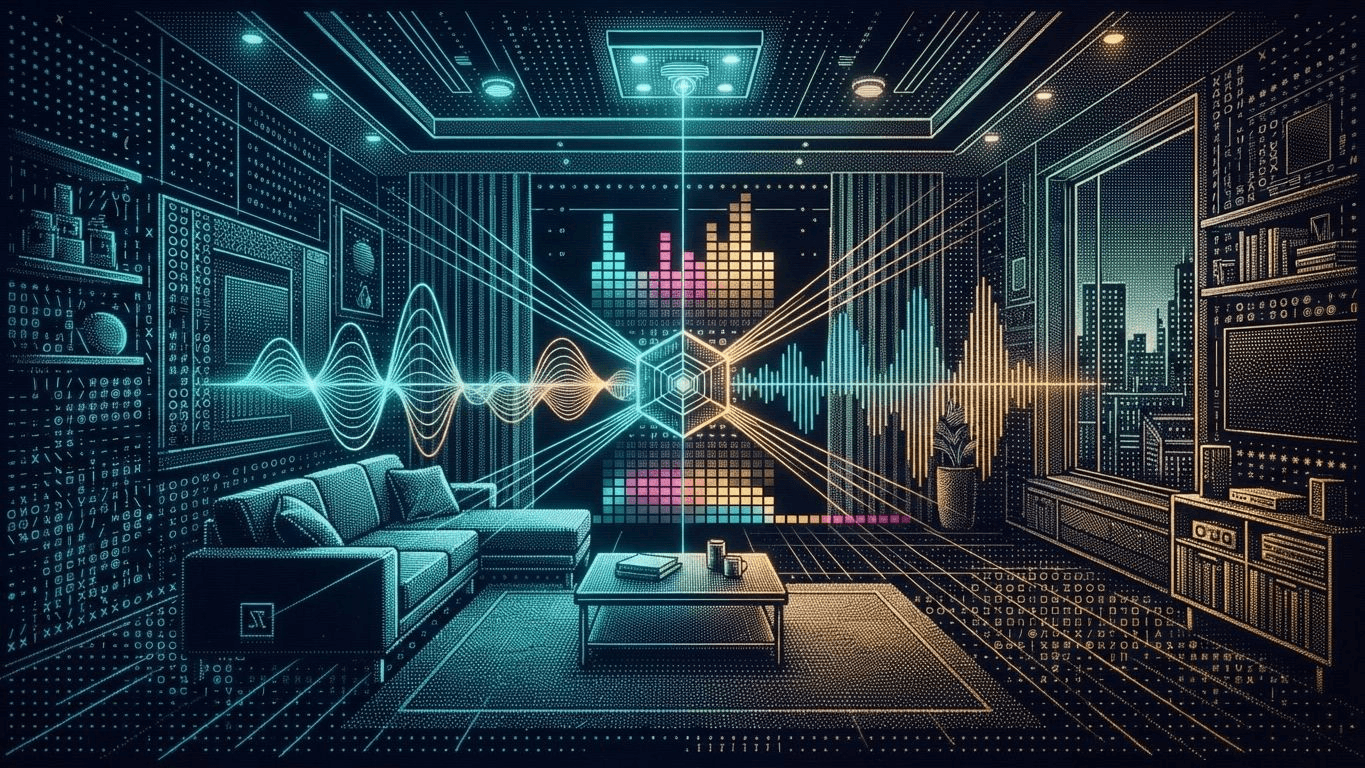
How Lumio approaches audio-visual calibration differently from mainstream home entertainment brands
How Lumio Approaches Audio-Visual Calibration Differently from Mainstream Home Entertainment Brands
Most home theater buyers assume calibration is calibration: a technician runs a tone generator, adjusts a few sliders, and calls it done. That assumption is exactly why so many expensive setups still sound flat and look washed out six months after installation. How Lumio approaches audio-visual calibration differently from mainstream home entertainment brands starts with rejecting that assumption entirely, and the difference shows up in ways that standard spec sheets never capture.
Key Takeaways
- Mainstream calibration is typically a one-time, factory-preset process. Lumio treats it as an ongoing, room-specific discipline.
- Audio and visual calibration are usually handled separately by most brands. Lumio integrates both into a single perceptual tuning pass.
- According to Technavio, the home theater market is forecast to grow by USD 11.41 billion at a CAGR of 10.7% between 2024 and 2029, meaning more buyers are entering a space where calibration quality separates real performance from marketing noise.
- Room acoustics and ambient light conditions are the two variables most mainstream brands ignore entirely. Lumio builds both into its calibration methodology.
Why Mainstream Calibration Fails the Living Room
Standard home entertainment brands calibrate at the factory, for a hypothetical room. The display leaves the production line tuned to a reference environment: controlled temperature, neutral walls, no windows, no furniture absorption. Your living room is none of those things.
The result is a gap between the manufacturer's calibration and your actual listening and viewing environment that most buyers never close. A display tuned to 6500K color temperature in a factory will render differently under warm incandescent lighting than under the cool LEDs common in modern homes. A soundbar calibrated to flat frequency response in an anechoic chamber will boom or thin out depending on whether your room has hardwood floors, a vaulted ceiling, or a sectional sofa absorbing mid-range frequencies.
According to Sound & Vision, professional AV calibration addresses these room-specific variables through measurement-based adjustment rather than preset application. The problem is that most mainstream brands stop at the preset stage and leave the measurement work to the buyer, who rarely has the tools or knowledge to complete it.
How Lumio's Room-First Calibration Philosophy Works Differently
Lumio's approach inverts the standard process. Rather than shipping a device calibrated to a reference room and hoping it translates, Lumio's methodology begins with the actual installation environment as the baseline.
This means the calibration process runs after installation, not before. Acoustic measurement tools map the room's frequency response at the primary listening position. Ambient light sensors read the room's typical illumination levels across different times of day. Only after that environmental portrait is complete does the actual tuning begin.
The practical outcome is significant. A Lumio setup in a room with exposed brick walls and minimal soft furnishings will receive a fundamentally different calibration profile than the same hardware installed in a carpeted room with heavy drapes. Mainstream brands ship one profile for both scenarios and call it done. As Nielsen's 2025 media planning guide notes, the convergence of streaming platforms and shifting content formats is creating increasingly complex demands on home viewing environments, which makes room-accurate calibration more relevant than ever.
How Does Lumio Integrate Audio and Visual Calibration Together?
Lumio integrates audio and visual calibration as a single perceptual system rather than two separate technical exercises. This is the sharpest departure from mainstream practice.
Most brands treat display calibration and audio calibration as independent workflows handled by different teams, often different vendors. The display gets tuned for color accuracy. The speakers or soundbar gets tuned for frequency response. Nobody asks whether the combined experience, what you see and hear simultaneously, is perceptually coherent.
Lumio's integrated pass addresses what audio engineers call the McGurk effect in reverse: the way visual information shapes auditory perception and vice versa. When dialogue clarity and lip-sync are tuned in tandem with color temperature and contrast, the brain processes the combined signal as more natural. The result is not just technically accurate. It is experientially convincing in a way that separately-calibrated systems rarely achieve.
What Mainstream Brands Prioritize Instead (And Why It's a Trade-Off)
To be fair to mainstream home entertainment brands, their calibration approach is optimized for a real constraint: scale. When you're shipping millions of units globally, factory calibration to a reference standard is the only economically viable approach. You cannot send a technician to every living room.
According to PwC, the entertainment and media industry is growing toward US$3.5 trillion by 2029, and the economics of that scale push hardware manufacturers toward standardized, cost-efficient processes. Factory calibration is one of those processes.
The trade-off is real but rarely disclosed. Buyers pay for a reference-quality display or audio system and receive a device tuned for a room they don't live in. The gap between the spec sheet and the actual experience in their specific home is treated as the buyer's problem to solve, not the manufacturer's.
Lumio's model accepts a different constraint: it works best at lower volume, with installation-level attention per unit. That is a deliberate positioning choice, not a limitation.
The Role of Ongoing Calibration Versus Set-and-Forget
One of the most consequential differences in Lumio's approach is temporal. Mainstream calibration is a moment in time. Lumio treats calibration as a living process.
Rooms change. Furniture gets rearranged. New lighting fixtures alter ambient conditions. Seasonal changes affect temperature and humidity, both of which influence acoustic behavior in enclosed spaces. A calibration profile that was accurate at installation drifts over months.
According to Deloitte's Digital Media Trends, hyperscale digital platforms are reshaping how consumers experience content, which means the content itself is changing in ways that stress-test calibration assumptions. HDR content, Dolby Atmos mixes, and 4K streaming all carry different calibration demands than the DVD-era content most factory presets were originally designed around.
Lumio's recalibration cycle accounts for this. Rather than a one-time configuration, the system includes periodic re-measurement checkpoints that adjust profiles as both the room and the content ecosystem evolve. The broader paid media landscape is shifting in the same direction: as LinkedIn's paid media trends analysis observes, AI integration and personalization are pushing every consumer technology category toward more adaptive, intelligent experiences rather than static configurations.
Is Lumio's Approach Right for Every Buyer?
No, and saying so directly is part of what makes the approach credible.
If you want a plug-and-play system that performs adequately out of the box across a wide range of room types, a mainstream brand delivers exactly that. The factory calibration is competent. The experience is acceptable. For many buyers, acceptable is the right trade-off for the price and convenience.
Lumio's calibration methodology is designed for buyers who find "acceptable" insufficient. Specifically, buyers who have invested in a room, in furniture placement, in acoustic treatment, and who want the audio-visual system to perform at the level that investment deserves. The calibration process takes longer, requires more upfront measurement work, and delivers an experience that mainstream factory presets cannot replicate.
That is not a universal value proposition. It is a specific one, and specificity is exactly what most mainstream calibration approaches lack.
Frequently Asked Questions
What makes Lumio's calibration process different from factory calibration?
Lumio calibrates after installation, using the actual room as the measurement baseline rather than a reference environment. Factory calibration uses a standardized room that bears no relationship to the buyer's specific space, which means the tuning is accurate for a room that doesn't exist.
Does Lumio calibrate audio and video separately?
No. Lumio's methodology integrates audio and visual calibration into a single perceptual pass. This addresses the way visual and auditory signals interact in human perception, producing a more coherent combined experience than separately-calibrated systems typically achieve.
How often does a Lumio-calibrated system need recalibration?
The recalibration cycle depends on how much the room changes over time. Significant changes to furniture, lighting, or acoustic treatment typically warrant a recalibration pass. Lumio's process includes periodic re-measurement checkpoints rather than treating initial calibration as permanent.
Why don't mainstream brands use room-specific calibration?
Scale economics. Mainstream brands ship millions of units globally and cannot practically provide installation-level calibration for each one. Factory calibration to a reference standard is the cost-efficient solution for high-volume production. The trade-off is a calibration profile that doesn't match the buyer's actual room.
Is Lumio's approach worth the additional complexity for casual viewers?
Probably not. Lumio's calibration methodology delivers the most value to buyers who have already invested significantly in their room and content setup and find factory-preset performance insufficient. For casual viewing in a typical living room, mainstream calibration is adequate.
If you're thinking about what performance-driven gear actually looks like in practice, Lotto Sport India brings that same precision-first mindset to athletic footwear and apparel. Worth exploring if you hold your equipment to the same standard you hold your setup.